
We use cookies to ensure that we give you the best experience on our website. If you continue to use this site we will assume that you are happy with it.
Equipment Selection for ATMP Cleanrooms: 7 Essential Strategies
BY: Royce Tourtillott

Equipment Selection for ATMP Cleanrooms: The Backbone of Your Facility
Equipment selection for ATMP cleanrooms cannot be separated from the cleanroom itself—together they form an integrated system where every furniture and equipment choice directly impacts your facility’s validated state. The field of advanced therapy medicinal products and biologics is revolutionizing medicine, but success hinges on one critical factor: unwavering compliance and control over the manufacturing environment. Your cleanroom provides the environment critical for your process equipment to operate properly; your equipment has a direct impact on the cleanroom’s ability to maintain this environment.
Unlike traditional pharmaceuticals, ATMP products are “living drugs”—highly sensitive and extraordinarily valuable. Every piece of equipment you introduce into your cleanroom has the potential to compromise the facility’s ability to maintain critical conditions such as temperature, differential pressure, humidity and particle levels. In today’s modern world, a reactive approach to facility planning is no longer sufficient. Forward-thinking facilities must recognize that equipment selection for ATMP cleanrooms is inextricably linked to cleanroom compliance, performance, and operator and patient safety.
The Cleanroom as Your Primary Barrier
Your cleanroom is the primary environmental barrier to the outside world—its ceilings, walls, floors, HVAC systems, and door interlock systems form the first line of defense against contamination. The equipment you place inside this space must be fit for purpose to ensure it does not undermine this primary barrier. Strategic equipment selection for ATMP cleanrooms means making selections that work with your cleanroom’s design, not against it. If equipment generates excessive heat, disrupts airflows, sheds particles or is damaged by sanitization or decontamination chemicals, cleanroom operations must compensate with increased HVAC capacity, cleaning, maintenance, and greater operational complexity. The wrong equipment selection can impact your cleanroom’s operating costs and turn the facility into a liability; the right selection makes it an asset.
7 Essential Equipment Selection Strategies for Your ATMP Cleanroom
1. Select Appropriate Materials That Support Cleanroom Integrity
Your cleanroom’s surfaces—walls, floors, and ceilings—are engineered to be cleanable, non-shedding, resistant to cleaning chemicals and durable to minimize mechanical damage. Equipment finishes should match this standard. Choose air and water-tight systems built for cleanroom environments: finished in high-grade epoxy, stainless steel and other materials that can withstand repeated chemical cleaning and occasional vapor phase hydrogen peroxide (VHP) decontamination without degradation. When equipment surfaces do not match your cleanroom’s specifications, surfaces can begin to break down and shed particles. This introduces a source of particulate and contamination that your cleanroom must accommodate and control.
2. Prioritize Closed-Systems to Reduce Risk and Environmental Requirements
Particularly in multi-product ATMP cleanrooms, cross-contamination risk is constant. Equipment selection should prioritize closed-systems and single-use technologies as fundamental best practices. By containing processes within sealed equipment, you dramatically reduce reliance on your cleanroom’s air change rates and filtration efficiency. Open systems force your cleanroom to work harder—more air changes, more HVAC strain, higher operational costs. Closed-system equipment selection protects your cleanroom’s validated state, reduces operating costs and extends the life of your facility’s critical systems.
3. Account for Thermal Loads to Preserve Critical Environments
Your cleanroom’s HVAC system is engineered to maintain precise temperature and humidity ranges that support critical processes, operator comfort and microbial growth control. High current drawing equipment can generate significant thermal loads. Without a proper accounting for these heat sources, your cleanroom’s HVAC system can easily be overloaded resulting in temperature and humidity excursions outside your cleanroom’s validated state, compromising product quality. Understanding the thermal loads being introduced into the cleanroom can help owners avoid costly HVAC upgrades or operational shutdowns.
4. Process Gas Management Within Cleanrooms
Process gas systems including O₂, CO₂, N₂, CCA, DCA and others are commonly employed in the manufacturing of ATMP and biologics products. These gases are typically supplied from cylinders or generated outside of the cleanroom envelope and therefore are a potential source of contamination. Closed gas systems incorporating adequate filtration and cleanroom appropriate equipment at the point of use are critical. Continuous monitoring equipment and accessible shutoff valves are required to ensure operator safety. Equipment failures with these systems can directly compromise the cleanroom environment, impact stored materials and potentially endanger operators.
5. Select and Install Equipment to Maintain Cleanroom Structural Integrity
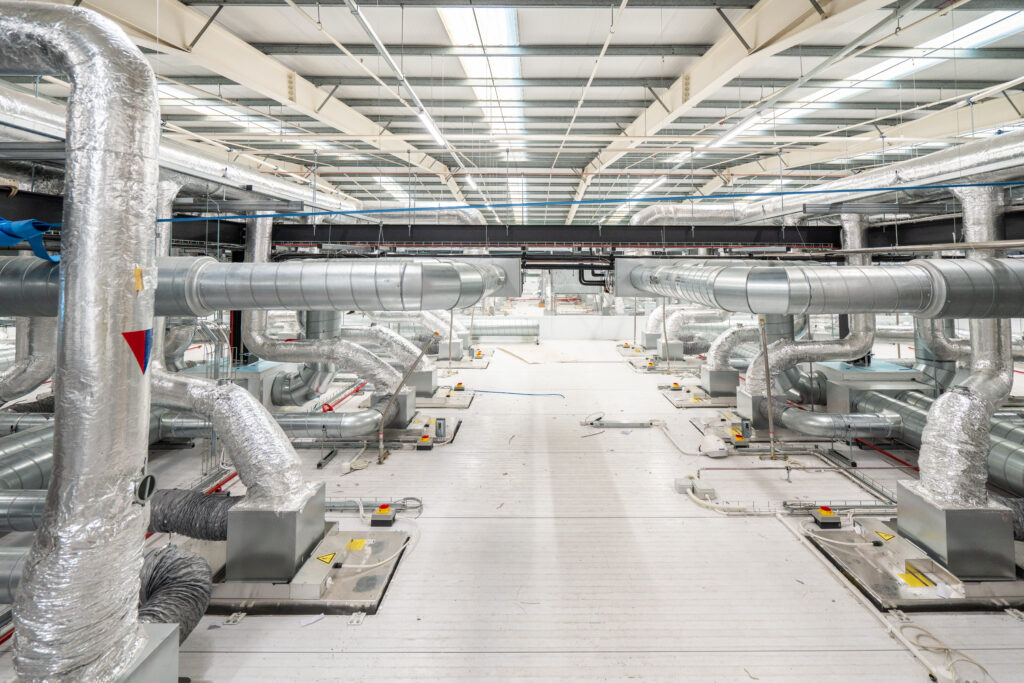
ATMP and biologics facilities often feature accessible or walkable ceilings that provide access to key equipment in the interstitial space above the cleanroom. These ceilings are engineered specifically for each project and any equipment installed in this space has the potential to compromise the structural integrity of the system. Additionally, vibrations can easily be introduced and add significantly to structural borne noise that can interfere with sensitive instruments and impact operators. Coordinating the installation of equipment above cleanrooms is therefore an important design step to avoid potential issues later on.
6. Integrate Equipment with Digital Systems for Cleanroom Compliance
Today’s cleanrooms are expected to support many monitoring and data collection systems including environmental monitoring, door interlocks and equipment status. In order to accommodate the required cabling, these requirements must be understood upfront to ensure connections are provided where needed. Many options are available today for this cabling however, late additions can be difficult to accommodate if data requirements are not well understood.
7. Transition to Isolator Barrier Systems That Elevate Patient Safety
The ultimate goal in ATMP and biologics manufacturing is the separation of contamination sources from critical open-aseptic manipulations. An increasingly popular way to separate people (the primary source of contamination) from aseptic processes is the use of isolator barrier systems. These systems are closed, completely separating the process from the operators providing an elevated level of sterility assurance. Industry standards and regulatory agencies recognize the reduced risk allowing cleanroom contractors to specify less stringent background environments that reduce initial HVAC system costs as well as ongoing gowning and energy costs. The strategic selection of the barrier system protecting aseptic manipulations can have a lasting impact on your facility’s upfront and ongoing operating costs.
Your Cleanroom’s Future Depends on Smart Equipment Selections Today
Equipment selection for ATMP cleanrooms is not merely procurement—it’s inseparably linked to facility engineering. Every piece of equipment you choose has the potential to weaken your cleanroom’s ability to maintain validated conditions, protect cell cultures, and ensure patient safety. By integrating strategic equipment selection into your cleanroom’s design, you build a manufacturing facility that is resilient, scalable, and audit-ready. The equipment decisions you make today determine your cleanroom’s performance and longevity tomorrow.